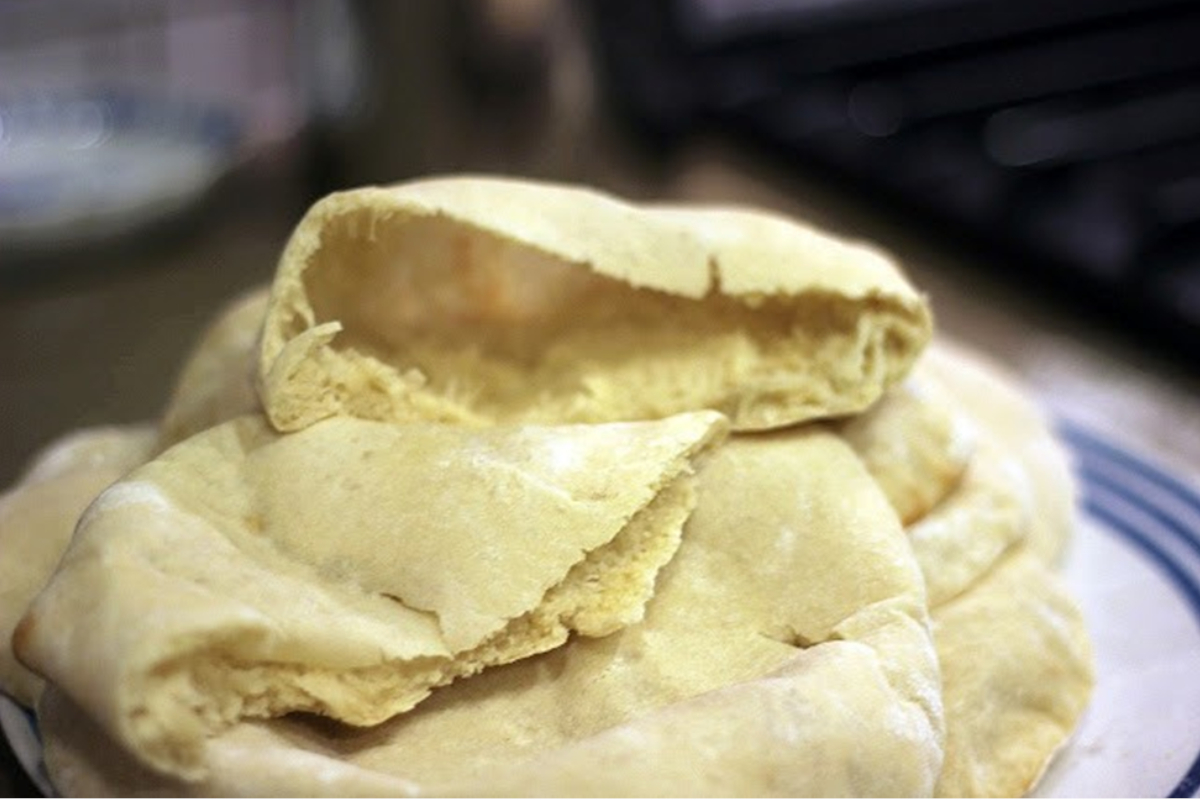
Pita is a bread that carries history in its soft, warm folds. Its origins stretch back thousands of years to the fertile lands of the Levant, where wheat first grew in golden fields under the sun. Simple dough made from flour, water, salt, and yeast is pressed flat and slapped onto a hot surface. As the heat seizes the dough, it swells and balloons, forming a pocket. That pocket is what makes pita extraordinary. It is the canvas for a thousand meals, a holder of stories as much as hummus.
At dawn in Jerusalem, the streets are quiet except for the rhythmic clatter of a baker’s paddle against stone ovens. The ovens glow deep orange from embers within, their blackened walls telling of centuries of baking. Dough is slapped onto the hot surface, hissing as it puffs into soft pockets. Steam curls upward, mixing with the scent of toasted wheat. Fresh pita is stacked in a large linen cloth, perhaps cream with streaks of deep red or earthy brown, edges frayed and worn from years of use. Families gather around tables, tearing the warm bread and dipping it into tahini, za’atar, baba ghanoush, or muhammara.
Later, in Damascus, ovens dome like clay suns glowing amber. Bakers press dough against the hot walls, listening for the faint hollow tap that signals the pocket is formed. Smoke from charcoal mingles with roasted lamb, and the scent of fresh parsley and lemon rises from small kitchens. Street vendors slice open pita for falafel, labneh, and grilled meats, the fillings spilling over the edges. Children tug at the soft bread, laughing as it stretches, while neighbors exchange bites across bustling market stalls.
In a quiet village in Lebanon, the sun rises over stone rooftops. Women remove freshly baked pita from clay ovens, still warm from the night’s fire. They wrap the bread in cloth, the faint patterns of red or brown streaks catching the morning light. At breakfast, pita cradles grilled vegetables, halloumi, olives, and pickled turnips, each bite releasing the aroma of lemon juice and fresh herbs. Villagers pass pieces around, a small communal ritual connecting families and neighbors.
On the streets of Cairo, pita carries the weight of centuries. Early morning markets are alive with vendors calling out, selling spices, dates, and stacks of warm bread. Pita scoops thick lentil stews, wraps around grilled meats, or serves as a plate for pickled vegetables. Travelers tuck pockets into satchels for the road, while children chase each other through narrow alleys, breaking off pieces to taste along the way. The warmth of the bread, the scent of wheat and fire, and the textures of its fillings form a living record of city life.
In Tel Aviv, modern cafes and street carts continue the tradition. Pita holds smoky eggplant, roasted peppers, pickled vegetables, falafel, shawarma, and just a touch of tahini. Tourists and locals alike feel its heat in their hands, tasting centuries of tradition with every bite. Vendors tap loaves against the counter to check the pockets, steam rising and mingling with the scent of spices, herbs, and fried chickpeas. Every piece invites sharing, passing from hand to hand, carrying nourishment and memory alike.
Through homes, streets, and markets, pita travels well. Each loaf is unique, some pockets deep, some shallow, some slightly uneven from hurried hands at dawn. Children tug at pieces with sticky fingers. Friends and neighbors break the bread, passing it around tables filled with roasted vegetables, grilled meats, halloumi, olives, pickled turnips, and fresh herbs. Its pockets hold not only food but connection, a daily witness to human life and community.
Pita is more than bread. It is a living thread through the Mediterranean and the Middle East, a witness to ovens, kitchens, streets, and family tables for thousands of years. Its simple ingredients hold centuries of labor, migration, and culture. Each warm, pliable loaf connects the present to the past, carrying nourishment, memory, and the shared lives of those who eat it. In the pockets of freshly baked pita, the glow of ovens, the heat of flames, and the hands that shaped it meet the laughter, conversations, and daily lives of those who eat it. Every bite folds wheat, warmth, fire, and human experience into one simple, enduring bread.