
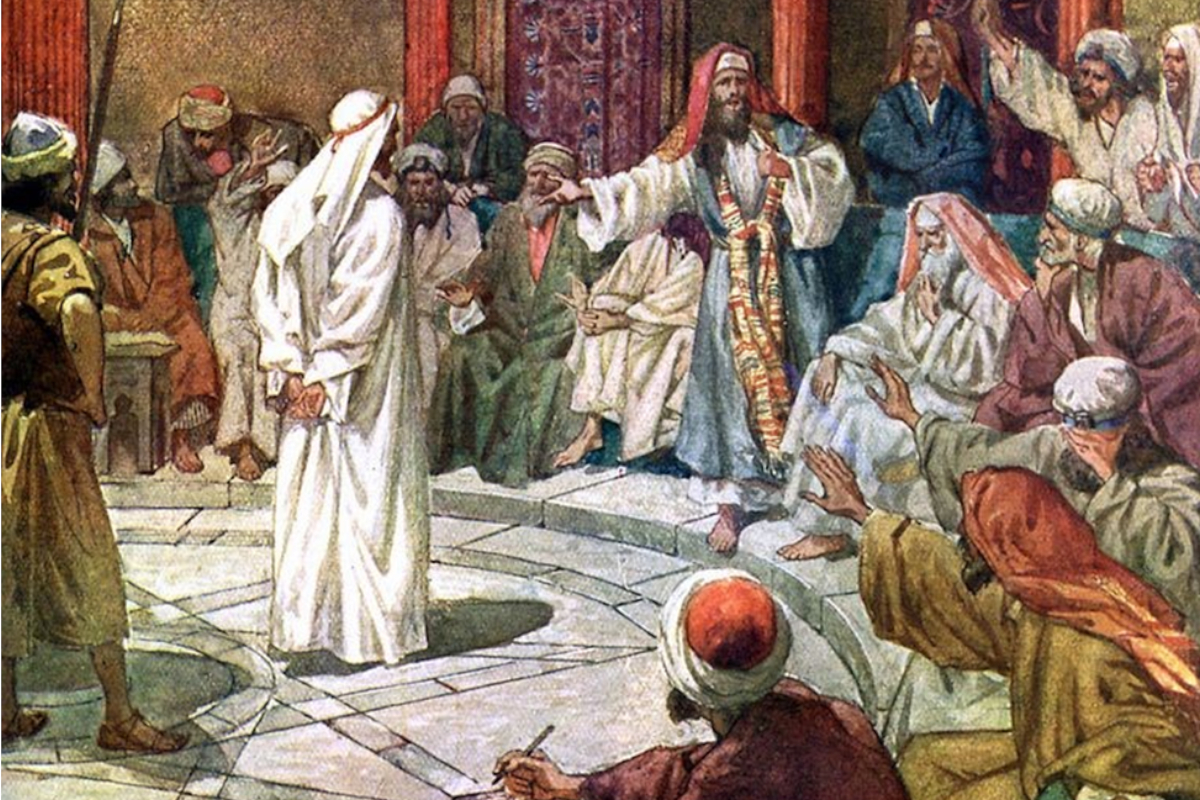
“Simon Peter had a sword. He drew it, attacked the chief priest’s servant, and cut off the servant’s right ear. (The servant’s name was Malchus.) Yeshua told Peter, ‘Put your sword away. Shouldn’t I drink the cup of suffering that my Father has given me?’ Then the army officer and the Jewish guards arrested Yeshua. They tied Yeshua up and took him first to Annas, the father-in-law of Caiaphas. Caiaphas, the chief priest that year, was the person who had advised the Jews that it was better to have one man die for the people.” John 18:10-15
This High Priest, likely motivated by personal ambition and perhaps even some very sincere political and religious concerns, was willing to sacrifice Yeshua’s life in order to secure his own national interests. It isn’t good but that is a story people tend to focus on when it comes to the events leading up to Yeshua’s death on the cross. Another one often highlighted is that a follower of Yeshua was also very willing to harm, perhaps even kill, that same high priests’ servant in order to preserve his own idea of how the Messiah’s life should be. So, in essence Peter was actually acting just like Caiaphas. Both were willing to sacrifice another person and inflict intense suffering on others in order to protect what they cared about.
While both Caiaphas’s insistence on sacrificing Yeshua life for his national interests and Peter’s choice to harm the servant in an attempt to protect his interests in regards to Yeshua are often condemned as wrong, how often do we act as if the ends justify the means? It is very tempting to think we can rightly promote God and a righteous way of life by harming others who seem to get in the way but it doesn’t matter if your motives are aligned with that of Caiaphas’ and obviously bad or “good” like that of Peter’s, wrong is still wrong. But when we are caught up a bad system surrounded by dysfunctional philosophies of how to handle issues, we may end up using wrong methods for “good” while not seeing how we are still perpetuating wrong.
While both Peter and Caiaphas were willing to sacrifice others for their personal agendas, Yeshua was willing to sacrifice Himself. “Do nothing out of selfish ambition or vain conceit. Rather, in humility value others above yourselves,” Philippians 2:3 and it is Yeshua’s example we are to follow. Wrong is wrong regardless as to what side of a religious/social/political issue it is found on and something is wrong with you as a believer when your core impulse is to sacrifice others for your personal interests. Now you might not consider ignoring Biblical principles to advance temporarily national interests like Caiaphas and/or to “protect” God in some misguided religious zeal like Peter but are you willing to do so to protect your job or relationships? It’s hard to spot spiritual compromises when our intentions seem good and even harder to notice compromise in little things. But the more we justify ignoring Yeshua’s character when it is inconvenient to our goals in the little things the easier it will be to claim to follow God while rejecting God’s ways in regard to much larger issues. So please remember to be careful.