Sivan arrives quietly, but it does not come empty-handed. It arrives with lengthening days, when sunlight stretches into evening and the world seems to steady itself. Urgency has passed, healing is underway, and the land itself seems to gather itself for what comes next. Across the hills of the Land of Israel, wheat fields turn from green to gold, their heads heavy, waiting to be cut. Sivan is the month of ripening, of readiness, of standing at the edge of something that must be received rather than escaped.
Following the brightness of Nissan and the steady inward work of Iyar, this month feels like a held breath just before words are spoken. Yet Rosh Chodesh Sivan is anything but empty. It is the day the Israelites arrive at Mount Sinai, a moment the Torah emphasizes as a rare unity, when the people camp “as one person with one heart.” Before a word is spoken from heaven, there is alignment on earth.
In the Torah, Sivan is inseparable from Sinai. “In the third month after the children of Israel had gone forth out of the land of Egypt, on that very day they came into the wilderness of Sinai” (Exodus 19:1). Tradition understands that third month as Sivan. Freedom has already been won in Nissan, and healing and reorientation have taken place in Iyar. Now comes responsibility. Now comes voice.
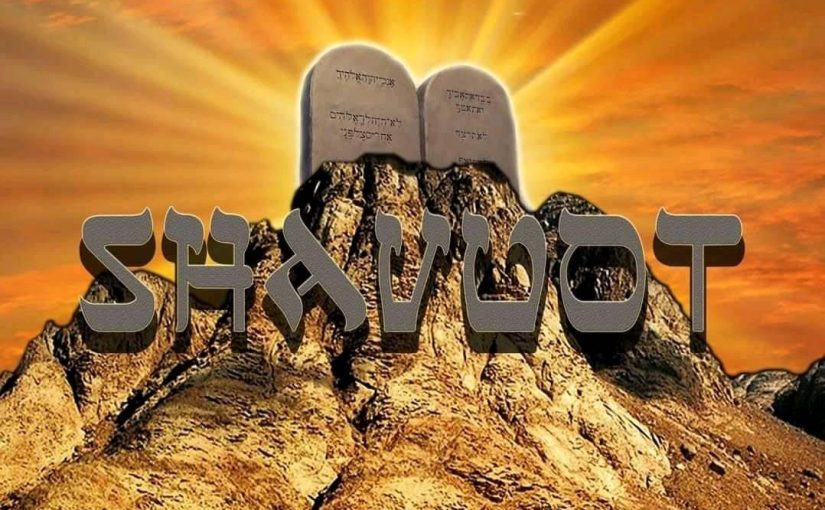
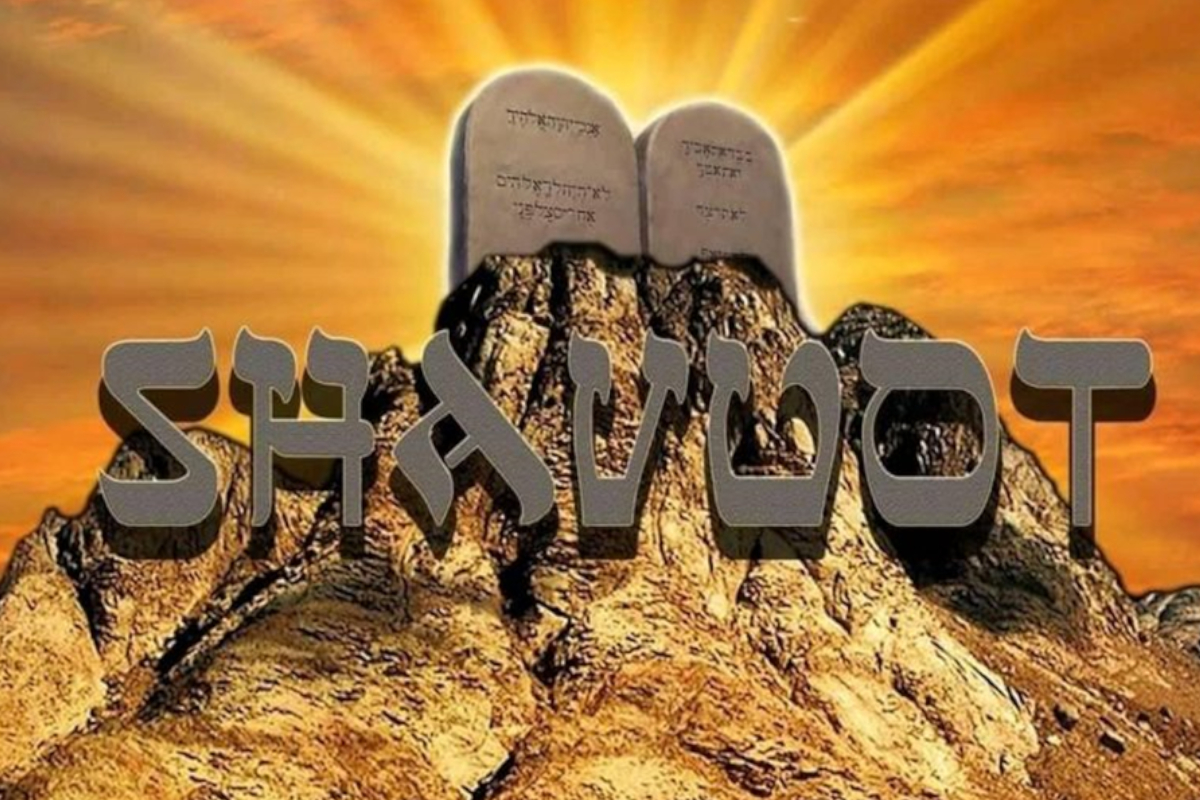
Shavuot, which falls in Sivan, does not portray revelation as calm or contained. Thunder and lightning break across the sky, a thick cloud settles over the mountain, and the sound of a shofar grows louder and louder (Exodus 19:16–19). Revelation shakes the ground. It startles the people into awareness. Even the mountain smokes as if creation itself is straining to speak.
Rabbinic tradition notices something striking about the setting. Torah is not given in a city, or on cultivated land, or in a palace. It is given in a wilderness. Midrash teaches that Torah is compared to fire and water, things that are ownerless and available to all (Midrash Rabbah, Bamidbar 1:7). To receive Torah, one must become like the desert, open and unclaimed, willing to be shaped. Sivan asks for humility rather than polish.
Another layer appears in the Talmud. In Shabbat 88a, the sages imagine Mount Sinai lifted over the people like a barrel, suspended above their heads as God says, “If you accept the Torah, good. If not, here shall be your burial place.” The image is dramatic and unsettling. Revelation is not optional. It demands a response.
On the agricultural calendar, Sivan is not a pause but a press of urgency. It marks the peak of the wheat harvest, the most physically demanding stretch of the year. Fields must be cut quickly with sickles, grain gathered and winnowed before the full force of summer heat sets in. Shavuot is called Chag HaKatzir, the Festival of the Harvest (Exodus 23:16), not as metaphor but as lived reality. Wheat differs from barley, which was offered earlier during Passover. Barley feeds animals. Wheat becomes bread. It is human food, refined through effort. The two loaves brought to the Temple on Shavuot were made from chametz, leavened bread (Leviticus 23:17), a rarity among offerings. By Sivan, the rawness of liberation has been worked into something risen, complex, and fully human.
Across Jewish communities, customs developed to make revelation tangible. Homes and synagogues are adorned with greenery, branches, flowers, and grasses laid across windowsills and bimahs, recalling a tradition that Sinai burst into life at the moment of revelation and hinting that Torah, like rain, causes what is dormant to grow. Tables reflect this gentler side of the festival as well. Dairy foods appear not as indulgence but as symbol, rooted in the verse describing Torah as “honey and milk under your tongue” (Song of Songs 4:11) and in the teaching that, newly bound by dietary law after Sinai, the people ate what required the least preparation. Simple dishes like blintzes, cheesecake, farmer’s cheese, or quark suggest learning meant to be absorbed slowly, with care and sweetness.
A quieter tenderness also belongs to this formidable month. The Book of Ruth is traditionally read on Shavuot, its story beginning at the start of the barley harvest during Passover and continuing through the wheat harvest, culminating in Sivan. Ruth chooses covenant not through spectacle but through loyalty, labor, and presence. “Your people shall be my people, and your God my God” (Ruth 1:16) comes without thunder or fire. It is devotion spoken in a human voice. Sivan represents the completion of her story, holding both Sinai and Ruth, revelation and relationship.
Mystical tradition associates Sivan with speech and listening. The Ten Commandments are called Aseret HaDibrot, the Ten Utterances. God speaks, yet the people must hear. Midrash teaches that each person received the divine voice according to their own capacity. One voice, many receptions.
As Sivan progresses, its brightness is tempered by remembrance. Alongside harvest and celebration, some communities pause to mark sorrow. On the twentieth of the month, a fast was first instituted by Rabbeinu Tam in memory of the martyrs of Blois, France, in 1171, and later reaffirmed by the Council of Four Lands to commemorate the Chmielnicki massacres of 1648 (Gezeiros Tach veTat). Though it has mostly faded from general Ashkenazi practice today, it continues to be observed in certain Chassidic circles. Even amid abundance and revelation, Jewish tradition preserves these moments of grief ensuring that joy does not erase memory.
The initial awe begins to fade as Sivan progresses. Silence returns to the mountain. Harvest fills the fields. What remains is the work of living what was received. Sivan does not linger in spectacle. It hands something weighty to the people and then steps back.
This is the month that asks not how free one feels but what will be done with that freedom. It is the season of consent, of standing together and saying, as the Israelites did, “Naaseh v’nishma,” we will do and we will hear (Exodus 24:7). Action comes first. Understanding unfolds over time.
Sivan teaches that revelation is not an ending. It is a beginning that expects response. Wheat is cut, Torah is given, and the long work of faith moves from the mountain into ordinary days, where words must become deeds and listening must become life.