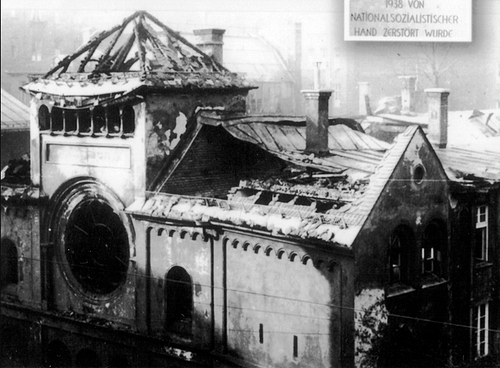
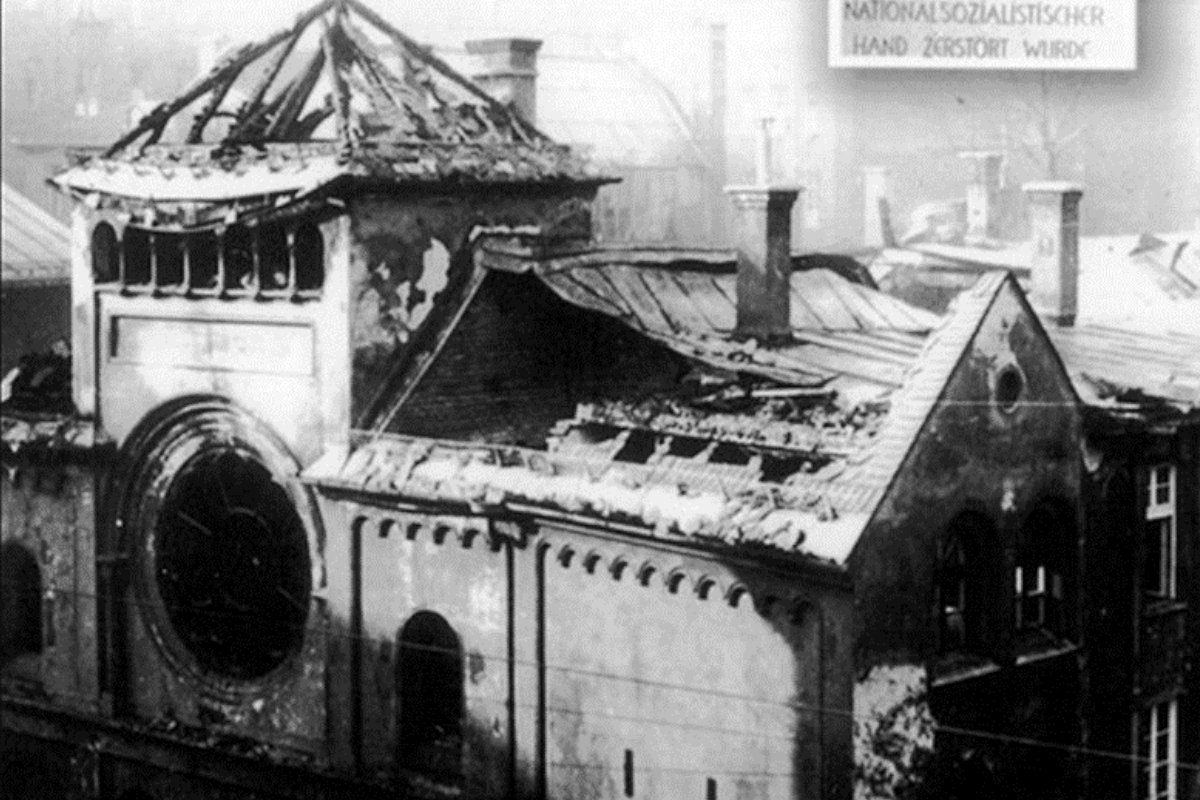
Jewish communities around the world will soon pause to remember, often translated as the “Night of Broken Glass,” when Jewish homes, businesses, and synagogues were destroyed across Germany and Austria in November 1938. Yet even this name carries unease. The term Kristallnacht was coined by the Nazi regime as a euphemism, a phrase that trivialized the destruction by focusing on the shards of glass glittering in the streets rather than the terror, blood, and flames that filled them. Many historians and members of the Jewish community now prefer the term November Pogroms, to better reflect the scale of the violence: hundreds of Jews killed, tens of thousands arrested, and entire neighborhoods left in ashes.
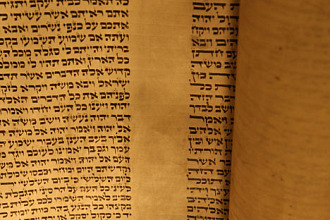
The immediate pretext for the pogrom was the assassination of a German diplomat in Paris by a young Jewish teenager, an event the Nazis seized upon to justify a coordinated campaign of terror against Jews across the Reich. In Vienna, the destruction was especially severe. More than a hundred synagogues and prayer houses were set on fire, their interiors smashed and looted. Torah scrolls were ripped apart in the streets. Jewish men were beaten and dragged away as crowds looked on. The violence was not the work of ungoverned mobs, but a meticulously planned campaign directed by Nazi authorities. Orders came from the highest ranks, carried out by the SS, the SA, and Hitler Youth units who moved systematically from building to building. Civilians joined in, seizing property and jeering at their neighbors, while police were instructed not to intervene.
That night and into the next morning mass arrests began immediately. More than 6,000 Viennese Jews were seized and sent to concentration camps such as Dachau, Buchenwald and Sachsenhausen. Many were eventually released, but only after signing papers agreeing to emigrate, a cruel tactic designed to drive Jews out of the country through terror. For many, escape proved impossible, and they were later deported again, this time to their deaths.
Before 1938, Vienna had been a city of remarkable Jewish achievement. Jewish writers, scientists, and musicians helped define its culture in the late nineteenth and early twentieth centuries. Theodor Herzl, the founder of modern Zionism, edited the Neue Freie Presse there. Sigmund Freud developed his theories in his Berggasse apartment. Jewish patrons supported the city’s theaters and orchestras. More than 200,000 Jews lived in Vienna, deeply intertwined with the city’s social and intellectual life, even as antisemitism simmered beneath the surface.
When the violence of November 1938 erupted, the world took notice but did little. Governments issued statements of concern but closed their borders to those seeking refuge. The United States and other Western nations refused to expand immigration quotas, sending a message that Nazi persecution would face no serious consequence. That silence emboldened what would come next.
After the war, Austria often portrayed itself as the “first victim” of Nazi aggression, emphasizing its annexation by Germany in 1938 while downplaying the widespread participation of ordinary Austrians in persecution and violence. This narrative had concrete consequences for returning Jewish survivors. Many found their property occupied or destroyed and struggled for years to reclaim homes, businesses, and communal assets. Bureaucratic hurdles and public indifference often compounded their losses, making survival and reintegration into post-war Vienna a long and painful process. Only in recent decades has Austria begun to confront this history more openly.
Today, nearly nine decades after the pogrom, Vienna is again a center of Jewish life. The Stadttempel, the city’s main synagogue and the only one to survive the destruction, remains a place of prayer and remembrance. Kosher restaurants, schools, and community programs have reemerged. The Jewish Museum tells the story not only of Vienna’s devastation but of its renewal. Meanwhile, the Lauder Business School attracts students from across Europe, part of a growing community that refuses to let memory fade.
Each November, as the city commemorates the pogrom, candles are lit in windows and prayers are said in the Stadttempel. The broken glass of 1938 is remembered, but it no longer has the final word. Vienna’s Jewish life, once silenced, speaks again, quietly, steadily, and with unyielding strength, a living testament that even shattered glass can catch the light again.