Moments in Jewish life can make time seem to pause. A family unwraps a shiny new ritual object, a Kiddush cup, a newly written or dedicated Torah scroll, or begins to dwell in a sukkah. A child takes a first step, or a traveler reaches a long-awaited destination. In those moments, the Shehecheyanu prayer rises naturally: “Blessed are You, Lord our God, King of the universe, who has granted us life, sustained us, and enabled us to reach this occasion.”
Recited across generations and centuries, this prayer has connected Jewish communities through time. Its roots reach back to Talmudic teachings emphasizing gratitude for life and milestones, with the formal wording of Shehecheyanu being codified later in post-Talmudic and medieval sources. Whether a community celebrated the first fruit of the season, the birth of a child, or the acquisition of a treasured object, Shehecheyanu offered a moment to pause and recognize that life, in all its variety, is a gift.
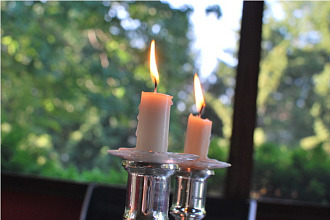
Life’s thresholds invite this prayer. Lighting the first candle of Hanukkah, donning a new garment, tasting a rare seasonal fruit, or stepping into a newly built home all call for a pause to give thanks. Traditionally, Shehecheyanu is recited only for joyous or positive occasions, not for neutral or negative events. Imagine biting into a perfectly ripe strawberry in June. If it is your first strawberry of the season, the red flesh is cool and tender, sweet and tangy all at once. Juice spills onto your fingers, glistening in the sunlight, and a scent of summer and earth rises with every bite. Tiny seeds prick your tongue, a delicate texture beneath the explosion of flavor. Each drop feels like a small miracle, a taste of life itself, and the Shehecheyanu rises from the heart without thought.
In modern life, milestones continue to call for Shehecheyanu. The first day at a new job, seeing a close friend after 30 days apart, a sip of wine on a wedding day, or the joy of a newborn in the family all are moments to acknowledge resilience. Some Jews also apply the blessing more broadly, such as for the first snowfall of winter or other meaningful firsts. Individual practice may vary, but the blessing is always intended for occasions of joy or significance. Even in challenging times, the prayer affirms that we have endured, we have arrived, and this moment is ours to cherish.
Timeless in its simplicity, Shehecheyanu does not ask; it receives. It does not demand; it celebrates. From bustling markets of ancient Jerusalem to quiet suburban kitchens today, it trains the heart to notice beginnings and to honor ordinary and extraordinary moments alike.
When tasting a fruit for the first time in the season, wearing a new garment, lighting a holiday candle, or stepping into a long-awaited experience, breathe in, lift your heart, and say the words. Life has carried you here, and that, this very breath, is enough to give thanks.