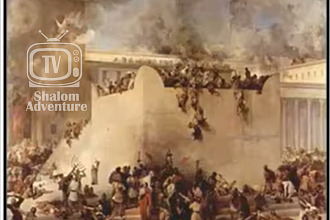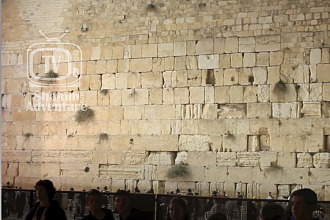
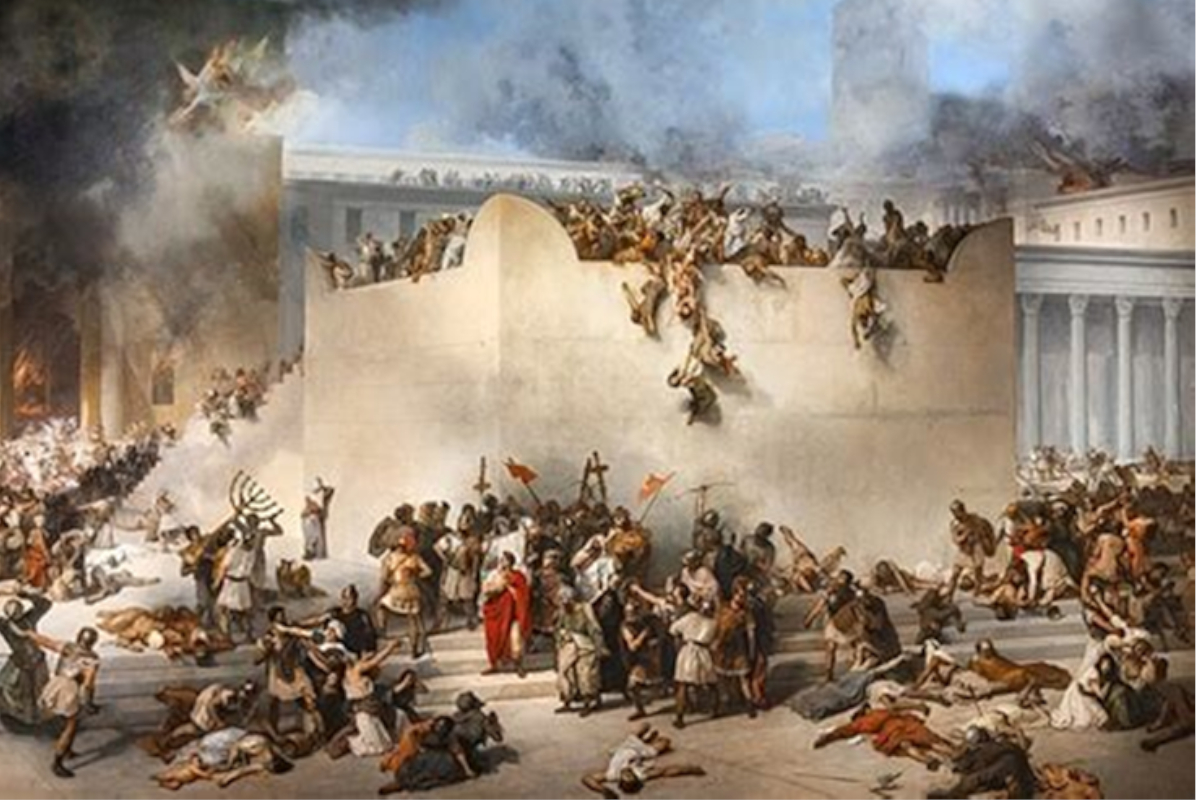
Av comes draped in the heat of summer, its long days heavy with sunlight and the memory of sorrow. It does not arrive suddenly in grief. By the time Av begins, the community has already been walking through loss for days, ever since the fast in the previous month when the walls of Jerusalem were first breached. Now, as Av opens, that earlier fracture deepens into something more intimate. The memory shifts from the city’s defenses to the heart of it all, the Temple itself, entered, defiled, and set aflame. The sorrow sharpens as the days advance.
Olive trees glisten with ripening fruit, grapevines hang heavy with plump clusters, and figs swell and split in the heat. Children still run along dusty paths with stained hands and sticky fingers, and baskets still fill with late summer produce. Life does not pause for mourning. That tension becomes part of the month’s spiritual texture. The rabbis teach that grief is not meant to erase the world’s goodness but to exist alongside it, to sensitize the soul rather than harden it.
As the first days of Av unfold, restraint settles over daily life. Weddings fall silent. Meat and wine are set aside in many homes. In synagogues, voices lower as kinnot are recited, each line carrying centuries of memory. Study halls fill with quiet intensity as learners trace the causes of destruction through ancient texts, searching for meaning in exile and fracture. Even children feel the shift. They play, but with an awareness that something weighty is being remembered around them.
The ninth day of Av arrives like a breaking point. The fast stretches long, marked by absence. No food, no drink, no comfort. People sit low, sometimes on the floor, reciting lamentations and recalling not only the destruction of the Temples but a long chain of suffering that followed. Yet even within this day, something unexpected stirs. As the afternoon light begins to soften, subtle signs of change appear. Homes are swept. Windows are opened and cleaned. There is a quiet turning of the heart toward what comes next. Rabbinic tradition holds that redemption is already being prepared at the very moment of deepest loss. The same date that holds destruction also carries the hidden beginning of comfort.
From that turning point, the name of the month itself begins to feel different. Av is often called Menachem Av, the one that comforts. The shift is not always obvious. It moves gently, almost imperceptibly at first, like a breeze entering a closed room. The days that follow carry a different tone. Mourning does not disappear, but it begins to loosen its grip.
Then comes the fifteenth of the month, Tu B’Av, and the transformation becomes visible. The fast has passed. The heaviness has lifted just enough for joy to return. In the fields and vineyards, where grapes have deepened in color and figs have reached their peak sweetness, the community gathers again. Young women dress in white garments, often borrowed so that no one is shamed by lack, and go out to dance. Their movements are simple but filled with life. Young men watch, hesitant at first, then drawn in. Matches are made not only through attraction but through a shared sense that something has been restored.
The air carries the scent of crushed grapes and sun-warmed earth. Baskets of pomegranates and figs are passed from hand to hand. Music rises, flutes and hand drums, steady and bright. Elders stand nearby, offering blessings and watching the next generation step forward into covenant. Stories are told, not only of destruction, but of endurance and return. The message is not spoken directly, yet it is everywhere. What was broken is not beyond healing. What was lost is not beyond renewal.
In homes and courtyards, daily life resumes its fuller expression. Meals regain their richness. Songs grow stronger. Travelers bring gifts of produce to friends and neighbors. Children move freely between orchard and street, their laughter no longer hushed. Study continues, but now it leans toward hope, toward promises of restoration found in the prophets.
Av, in all its complexity, refuses to settle into a single emotion. It holds the breach and the fire, the fast and the dance, the lament and the song. It teaches that sorrow can reach its deepest point and still give way to comfort, that even as the Temple burned, something unseen began to rebuild. The olives ripen, the grapes are gathered, the figs are tasted at their sweetest moment. And in the midst of it all, the people learn again how to carry memory without surrendering joy, how to live between loss and promise, and how to recognize that even the darkest day may contain the first light of redemption.