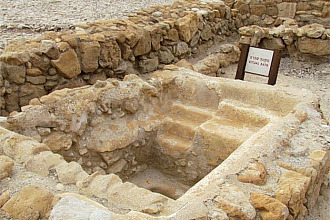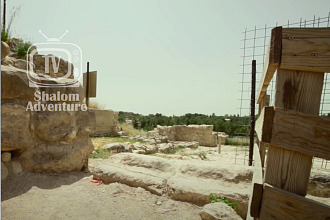

On August 18, 2025, archaeologists from the University of Haifa announced a remarkable discovery: a 1,600-year-old Christian care facility for the elderly in the ancient city of Hippos, perched on a hill that overlooks the shimmering waters of the Sea of Galilee and the rolling, fertile hills of Galilee. Olive groves, fig trees, and cypress-lined terraces likely surrounded the facility, creating a serene environment for its residents and reflecting the region’s rich agricultural life.
At the entrance, researchers uncovered a mosaic inscribed in Greek: “Peace be with the elders.” The inscription reflects a formalized commitment to elder care, suggesting that the residents were not only protected but respected, with their dignity preserved within the community. Archaeologists also found traces of fruit pits and seeds, indicating that the diet included locally grown figs, grapes, olives, and pomegranates, providing both nutrition and a connection to the land around them.
Hippos, a city that thrived under Byzantine rule, is best known for its Roman-era ruins and strategic location as part of the Decapolis. This discovery shows that alongside trade, worship, and civic life, the city nurtured institutions dedicated to society’s most vulnerable members. Archaeologists believe the facility included communal living spaces and areas for caregiving, hinting at a structured approach to elder care centuries before modern social welfare systems existed.
In the Byzantine period, elder care was often closely linked to Christian values and charitable practice. Wealthy individuals, church communities, and local authorities sometimes established hospitals, hostels, and care homes to serve the elderly, the sick, and the poor. While most people lived with extended families, these institutional facilities provided a safety net for those without family support or whose needs exceeded household capacity. The mosaic at Hippos suggests that elder care was not only practical but also spiritual, emphasizing respect, dignity, and peace for the residents.
Dated to the late 4th or early 5th century CE, the Hippos site offers rare evidence of organized, institutionalized elder care during the Byzantine period. It highlights a shared human value: the respect and care for elders, a principle deeply rooted in many religious and cultural traditions. Just as the Torah commands honoring one’s parents and elders, this ancient mosaic reflects a broader cultural awareness of the importance of compassion and community responsibility.
As excavations continue, researchers hope to uncover more details about daily life in the facility. The discovery reminds us that concern for the elderly is not a modern concept. It is a timeless expression of human decency and faith in action, bridging communities across time and tradition.