It did not begin with a proclamation in spirit, but the tradition of marking May as Jewish American Heritage Month is a modern one, formally established in the early 21st century. What gives it its deeper resonance is not the calendar itself, but the older American promise it is often tied to.
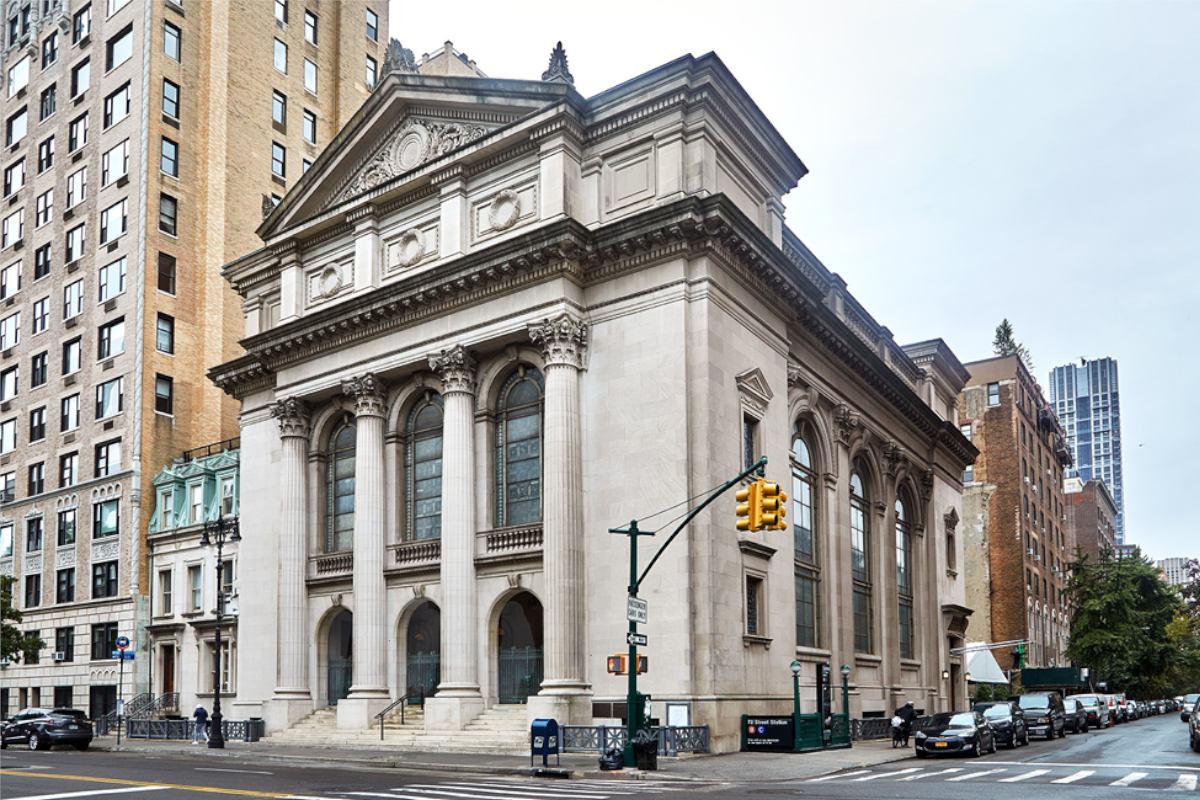
This week, President Donald Trump issued a proclamation recognizing the month and pointed to an earlier foundational moment in American civic history. He referenced the exchange between George Washington and the Hebrew Congregation in Newport, gathered at what is now known as Touro Synagogue, in the state of Rhode Island. The building itself, dedicated in 1763, is the oldest surviving synagogue structure in the United States, while Congregation Shearith Israel, founded in 1654, remains the oldest Jewish congregation in the country.
During Washington’s visit to Newport, the congregation presented a letter expressing both gratitude and a careful uncertainty about whether the new republic would fully extend equality or merely tolerate difference.
Washington’s reply became one of the clearest early articulations of American civic ideals. Written through his customary staff process and then signed by him, it carried his voice and authority even if the penmanship itself was not his own. In it, he wrote, “For happily the Government of the United States, which gives to bigotry no sanction, to persecution no assistance requires only that they who live under its protection should demean themselves as good citizens.” He added a vision that moved beyond law into civic belonging: “May the Children of the Stock of Abraham, who dwell in this land, continue to merit and enjoy the good will of the other Inhabitants; while every one shall sit in safety under his own vine and fig tree, and there shall be none to make him afraid.”
The words were not a description of the young nation as it was, but a statement of what it claimed it could become. In a world where Jewish communities across many regions still faced formal restrictions and social exclusion, the sentiment stood out as unusually expansive for its time.
Jewish presence in North America predates that exchange by more than a century. Jacob Barsimson arrived in New Amsterdam from Holland in 1654, followed shortly afterward by a group of 23 refugees fleeing Recife in colonial Brazil after the Portuguese recapture of the city. The Recife group is often remembered as the first organized Jewish community in what would become the United States, while Barsimson’s arrival marks an earlier individual beginning. Together, they represent the earliest threads of Jewish settlement in a society still defining the boundaries of religious belonging.
Over time, small Jewish communities formed in port cities such as Newport, Charleston, and New York. Synagogues were built, trade networks expanded, and communal life developed within a young republic still negotiating the meaning of pluralism.
The 19th and early 20th centuries brought larger waves of immigration, especially from Eastern Europe. New languages, customs, and religious traditions arrived alongside opportunity and hardship. Jewish Americans entered public life in law, medicine, education, labor movements, business, and the arts, while also confronting periods of exclusion that tested the distance between national ideals and lived reality.
Trump’s proclamation situates Jewish American Heritage Month within that broader historical arc. It is a modern observance, but it draws its emotional weight from much older language about belonging, responsibility, and civic equality.
Washington’s Newport letter becomes the symbolic anchor for that reflection. The American idea was never only about who was already included, but about who could be. Across generations, Jewish Americans have lived within that evolving question.
May, then, becomes less a historical endpoint than a yearly return to it, measuring the present against words written at the nation’s beginning and asking how fully they still hold.