Sounding the Shofar

Sounding the Shofar

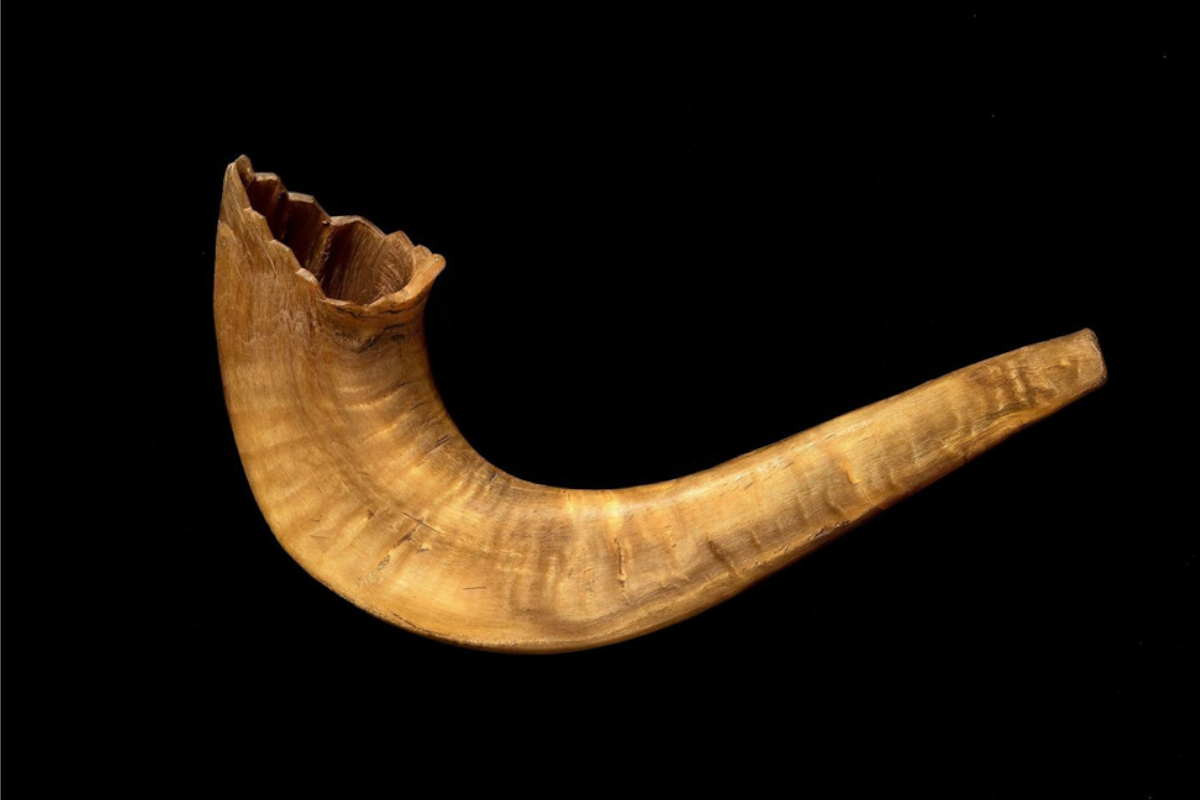
For those of you who have attended, a Rosh HaShanah service (or watched one here on the Shalom Adventure magazine), a prominent practice you will observe is the blowing of a shofar, or ram's horn.   This practice is largely derived from the Biblical injunction in Leviticus 23 to observe this day with "blast of trumpets."  At many Rosh Hashanah services, it is not uncommon for the shofar to be "blasted" upwards of 100 times!

What is the Sounding of the Shofar Intended to signify?

Among other things, the shofar blasts at Rosh Hashanah are intended to represent:

•    The Coronation of a King:
•    A Call to Repentance...the shofar serves to remind the Jewish people that the very King they coronate with its blast is the same King before whom they will be judged. The shofar blast here is an alarm to "awaken" the souls of God's people to their need of His mercy and forgiveness.
•    The commemoration of the binding of Isaac (Akedah) and God's provision of a substitute ram:  Significantly, two of the Torah portions read at Rosh HaShanah services are the accounts of 1) the birth of Isaac (Genesis 21:1-24), and 2) Isaac's binding by his father Abraham (Gen. 22:1-14).  You'll remember that in the Akedah, Abraham's faith was tested when God ordered that he offer his only beloved son, Isaac, as a "burnt offering"  on Mount Moriah (v. 2).  Abraham obeyed God, demonstrating his unwavering faith in the LORD.  Then the LORD, seeing that Abraham truly "feared God," (v.12), commanded that Abraham withdraw the knife that was soon to slay Isaac.  Instead of Isaac, God provided a ram for the burnt offering as substitutionary sacrifice.  Thus the shofar, or ram's horn,  is meant to remind the observer of Rosh Hashanah of the "divinely provided ram" that paid the "ransom for Isaac's life" (Parsons).
 

Related Articles

More From Holy Days Articles

The Sixth Plague: Boils

Exo 9:8 And the LORD said unto Moses and unto Aaron, Take to you handfuls of ashes of the…
The Sixth Plague: Boils
Water Immersion (Tevilah Mikveh)

Water Immersion (Tevilah Mikveh)

Water immersion (tevilah mikveh) ... repentance--and therefore forgiveness--is a predominant…
Water Immersion (Tevilah Mikveh)

New Year of the Trees

Happy Tu BeShvat, the Jewish New Year of the Trees. Tu BeShevat 2021 begins in the evening of…
New Year of the Trees
Porkless Passover Toast

Porkless Passover Toast

Introducing our exclusive brand new Shalom Adventure cartoon series Porkless created by the…
Porkless Passover Toast

The Eighth Plague: Locusts

Exo 10:3 And Moses and Aaron came in unto Pharaoh, and said unto him, Thus saith the LORD God…
The Eighth Plague: Locusts

A Woman Won by Love

I have a couple of young male friends who once made a science of flirting. They read books…
A Woman Won by Love

Purim Grogger

This is one of our green crafts that reuse household objects and turn them into symbolic or…
Purim Grogger
10th plague of Egypt

Passover

The Passover is a very important Holy Day in Jewish history. The Passover begins the day before…
Passover

Rejoicing with the Family of God

From night one of the festival of Sukkot, when that first meal is enjoyed with family and…
Rejoicing with the Family of God
Tu B'Shvat

Tu B'Shvat

In the heart of winter, when the hills of Israel are still damp with soft rains and the air…
Tu B'Shvat
Feast of Trumpets

Feast of Trumpets

The Feast of Trumpets is the first of the fall feasts. It begins on the first day of the…
Feast of Trumpets
Sukkot - The Festival of Booths

Sukkot - The Festival of Booths

Sukkot, the Festival of Booths, calls us to dwell in temporary shelters while celebrating God’s…
Sukkot - The Festival of Booths

Sweet Potato Kugel

SWEET POTATO KUGEL(From No Cholesterol Passover Recipes, by Debra Wasserman)Serves 12.…
Sweet Potato Kugel

Publish the Menu module to "offcanvas" position. Here you can publish other modules as well.
Learn More.


donation