
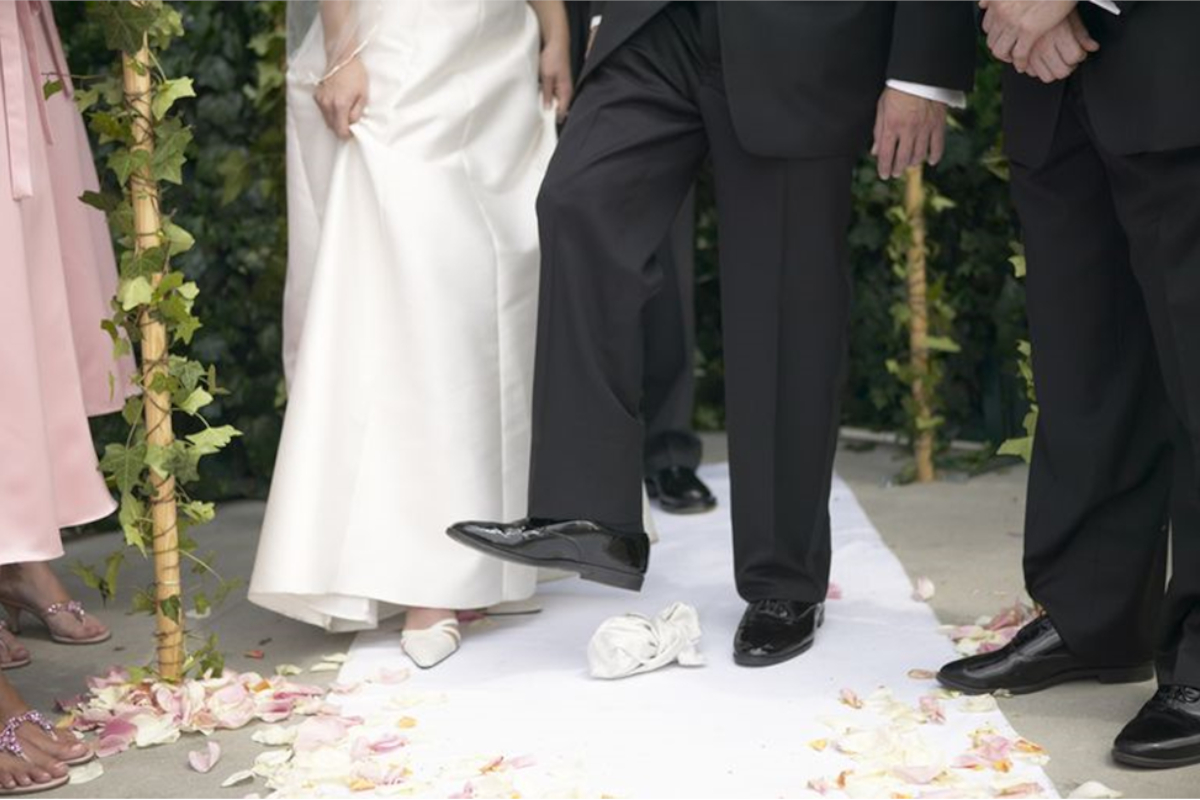
A sudden stomp, a sharp crash, and the room vibrates with excitement, emotion, and anticipation. Guests gasp, cheer, laugh, or fall into reflective silence. In that instant, broken glass becomes more than a ritual. It embodies centuries of Jewish tradition and the profound bond between two people committing their lives to one another. Each shard scattered across the floor catches the light, glinting and scattering tiny rays in every direction, reflecting both the sparkle of celebration and the weight of symbolic meaning.
The practice of breaking a glass at a Jewish wedding is widely associated with the destruction of the Second Temple in Jerusalem in 70 CE. While historical evidence does not trace the ritual directly to the Temple, tradition holds that including a moment of remembrance within a joyous celebration acknowledges that sorrow and happiness coexist. The ritual as we know it today became prominent in Ashkenazi communities of Europe during the 19th and early 20th centuries, symbolizing life’s fragility, the permanence of vows, and the connection between personal joy and communal memory.
In Eastern Europe, particularly Poland, Lithuania, and Germany, families incorporated symbolic acts into wedding ceremonies, marking transitions, sealing vows, and embedding meaning into each gesture. Kitchens and synagogues filled with music, chatter, and the aroma of baked goods, wine, and candles. Children peeked from corners, fascinated by the gestures of adults, while neighbors and extended family gathered to witness the sacred union. When families migrated to new lands, rituals like glass-breaking traveled with them, recreating centuries-old ceremonies in unfamiliar spaces. Couples stepping on glass in distant cities connect their love to generations who performed the same act, honoring both past and future in a single gesture.
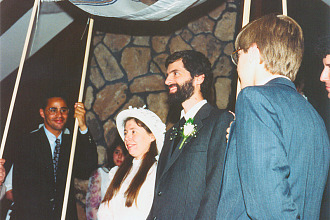
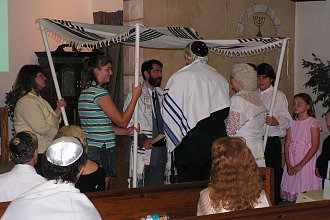
During the ceremony, the couple places a foot on a glass, often wrapped in cloth or set inside a protective covering. The sharp crash fills the room with sudden energy, startling and thrilling simultaneously. Shards scatter across the floor, catching sunlight, flickering candlelight, or the glow of chandeliers. Light dances across each fragment, creating a sparkling effect that moves with every shift in perspective. Guests clap, cheer, and sometimes shed tears, participating in a ritual that bridges past and present, joy and reflection. Each fragment becomes a tangible symbol of union, reminding the couple that marriage transforms life.
Safety and symbolic meaning are carefully balanced. Wrapping the glass or using prepared containers prevents injury while preserving the ritual’s impact. Beyond remembrance, the act signifies the transformative power of marriage. Just as the glass cannot return to its original form, the lives of the couple are forever united, intertwined, and strengthened by devotion. Every crack and sparkling shard mirrors the reality that deep love requires attention, care, and awareness of life’s fragility.
Sensory richness heightens the ritual’s impact. The crash resonates sharply, prompting a collective intake of breath. Shards glint across polished floors, scattering points of light that shimmer like tiny stars. The mingling scent of polished wood, wine, and candlelight fills the room. Laughter, exclamations, and applause rise in harmony with the officiant’s blessings, blending sight, sound, and emotion into a memory that will linger long after the ceremony concludes. Guests lean closer to examine the fragments, marveling at how something broken can shine so brilliantly.
The broken glass also embodies love and partnership. Couples often interpret it as a symbol of the permanence and strength of their vows. Life together will inevitably bring challenges and hardships, yet devotion transforms fragility into resilience. Some personalize the ritual with colored or decorative glass or by breaking multiple pieces, creating moments of visual drama while preserving centuries-old meaning. Music, dancing, and blessings immediately after enhance the emotional resonance, celebrating union as well as the shared journey that lies ahead.
Marriage itself is reflected in the scattered fragments. Pieces cannot return to their original state, just as two lives cannot remain unchanged when joined in love. Vulnerability and courage coexist in the act, celebrating a willingness to embrace life together, to share joy, and to face uncertainty. Each shard catches the light differently, refracting it into ever-shifting glimmers that recall both the impermanence of life and the enduring brilliance of shared love.
Breaking glass at a Jewish wedding links couples to generations past and binds them to each other in the present. Every crash honors history, celebrates enduring love, and marks the beginning of a life built together. Amid sparkling fragments that play with light, guests witness how joy and remembrance coexist, and how love, fragile yet radiant, carries meaning across time. In that single, gleaming moment, past and future come together, and the couple steps forward into a life united, resilient, and bright.








/groom-stepping-on-glass-during-jewish-wedding-ceremony-85636772-593c987b5f9b58d58a8a97e8.jpg)