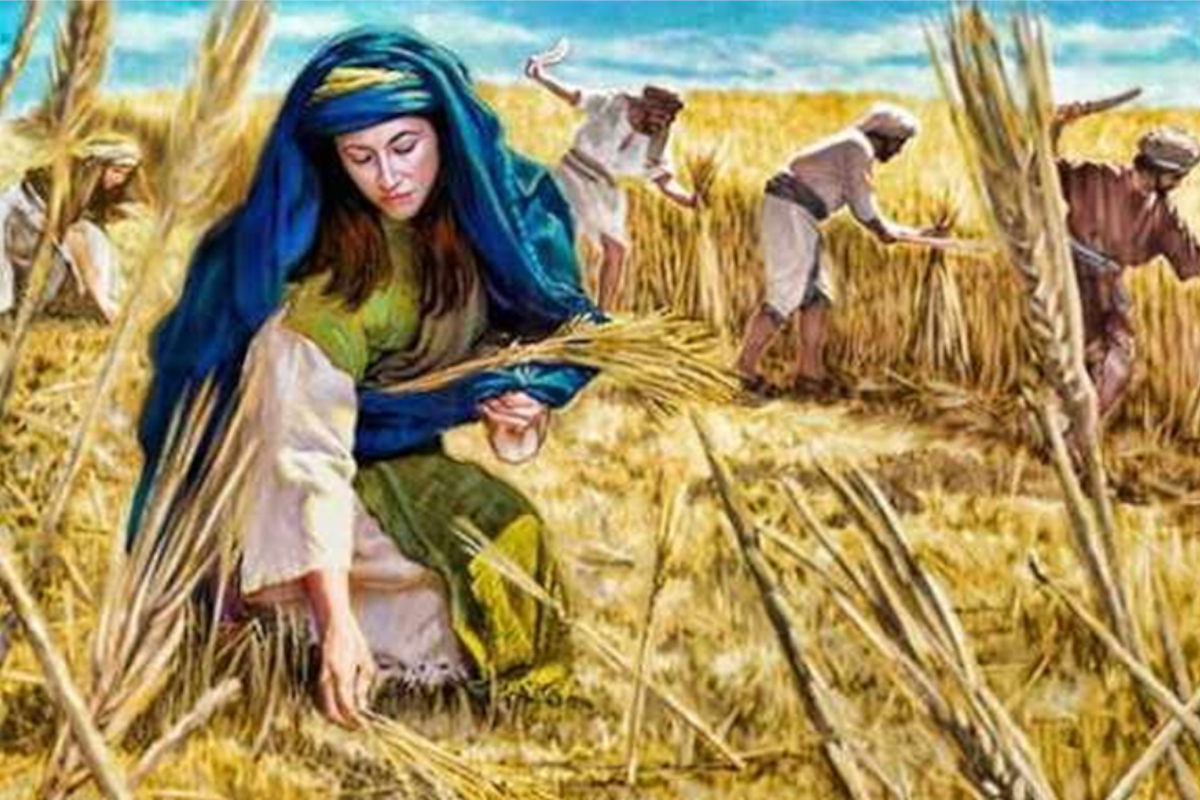
“Now, Naomi had a relative on her husband’s side—from Elimelech’s family—a prominent man of substance whose name was Boaz. Ruth the Moabitess, said to Naomi, ‘Please let me go out to the field and glean grain behind anyone in whose eyes I may find favor.’ Naomi said to her, ‘Go ahead, my daughter.’ So Ruth went out and gleaned in the field behind the reapers. She just so happened to be in the field of Boaz, who was from Elimelech’s family...
Then Boaz said to Ruth, ‘Listen to me, my daughter. Do not go to glean in another field or even pass on from here, but stay close to my female workers. Keep your eyes on the field that they are harvesting, and follow after them. I strongly ordered the young men not to touch you. When you are thirsty, you can go to the jars and drink from the water the young men have drawn.’ Then she fell upon her face, bowing to the ground, and said to him, ‘Why have I found favor in your eyes that you have noticed me, even though I am a foreigner?’” Ruth 2:1-10
When we read the book of Ruth we tend to focus on Ruth, of course, but I want us to think of the story a bit more from the side of Boaz. He was a wealthy landowner who could have easily justified turning Ruth away. She was a Moabitess. The Moabites were often enemies of Israel in the Bible. On top of that Ruth was only related to the Israelites through her mother-in-law Naomi who herself was only related to Boaz through marriage and lived in another land and returned after her husband died and things got hard financially. So basically, Ruth really didn’t have much of a reason for why she should be considered an exemption from the label of an outsider. Boaz could have said my family worked hard for this land and it isn’t fair for me to share the fruits of my labor with outsiders and limit his compassion to his own people. But instead of resenting Ruth for coming into his town as a foreigner looking for grain, he welcomed her and actively discouraged any harassment that he knew some would likely be directed towards her.
This sort of unselfish behavior towards those who are in need is what we should all aim to have. Maybe you don’t know a foreigner but you can still choose to be kind to the “outsiders” you notice. Just as Ruth is praised as righteous for accepting the God of Israel as her own. Boaz is also seen as righteous for accepting another person as his own-someone also loved by God-no matter where they came from. We should treat people the way we would want to be treated if we were in their position. “The outsider dwelling among you shall be to you as the native-born among you. You should love him as yourself—for you dwelled as outsiders in the land of Egypt. I am Adonai your God.” Leviticus 19:34.
So, while we normally focus on how Ruth may have never have become an ancestor of Yeshua and David if she wasn’t righteous enough to trust God and put her elderly mother-in-law’s needs above her own convenience instead of following the financially sound advice to return to her own people to get married for stability. But Boaz likely would have never become a part of Yeshua’s lineage either if he didn’t trust God enough to be able to provide for him and his own people while also welcoming an outsider to harvest grain from his land. We all miss out on blessings when we lack the faith to be unselfish and focus on our own earthly prosperity over the best interests of others. So be like Boaz, don’t let the prospect of extra wealth make you greedy, share what you have with others, and don’t stereotype or dehumanize people different from you-even if they come from a group you might be greatly tempted to distrust.