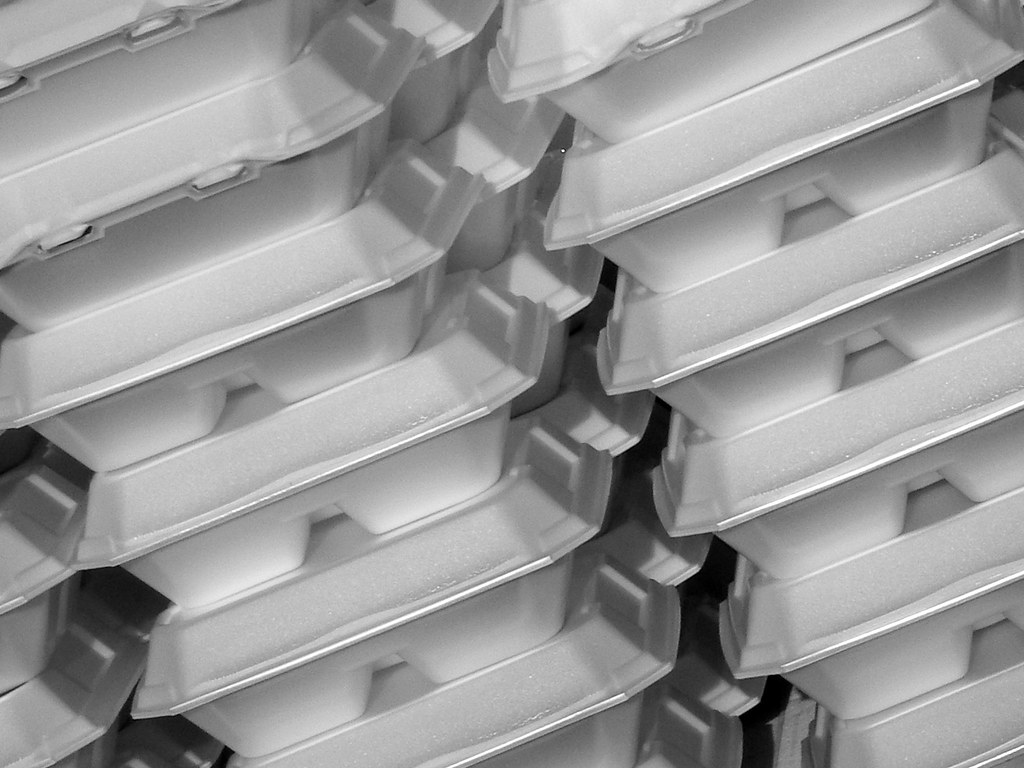
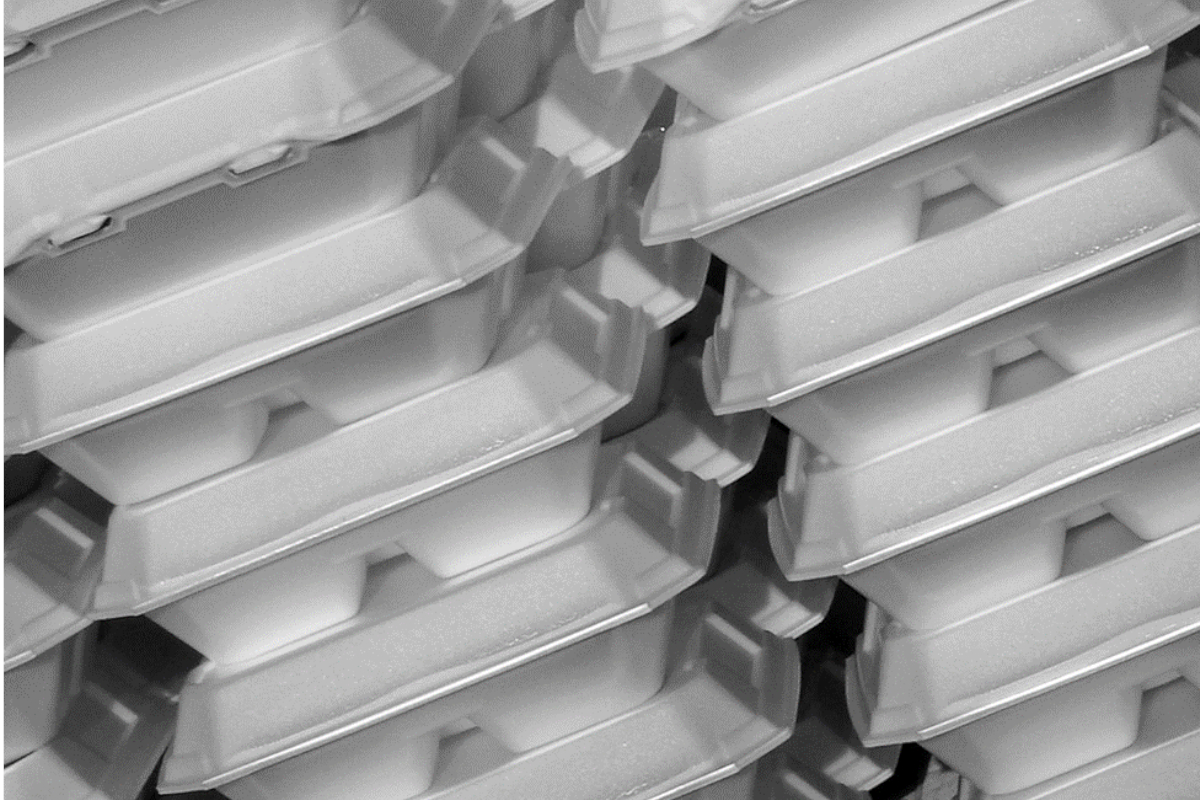
The takeout box looks harmless. Light. Convenient. Almost forgettable.
You open it, eat, toss it, and move on.
Maybe it came from a small Chinese restaurant tucked into a strip mall, red lanterns glowing in the window, the air thick with garlic and soy sauce, a stack of white containers snapping shut behind the counter as orders are called out. The food is hot enough to fog the lid, and you carry it out with both hands, focused on the meal waiting inside. The container barely registers.
A few nights later, you are back again. The same counter, the same quick exchange, another container passed across without a second thought. It is familiar. Efficient. Easy.
But that small white box has a longer story than the few minutes it spends in your hands.
Styrofoam, or expanded polystyrene, is built for durability. That is precisely the problem. It does not break down in any meaningful human timeframe. What feels disposable is, in reality, stubbornly permanent. Long after the meal is forgotten, the container lingers. It drifts through landfills, breaks into fragments, and finds its way into waterways where it becomes nearly impossible to fully clean up.
In the ocean, it does not simply sit there. It transforms into something more dangerous. Sunlight and waves break it into tiny particles that resemble food. Fish eat it. Birds feed it to their young. And slowly, quietly, it moves up the food chain until it circles back to us.
The environmental cost is only part of the story.
Heat a styrofoam container, and it begins to release small amounts of chemicals. These substances can migrate into food, especially when the contents are hot, oily, or acidic. It is not the kind of thing you taste or notice in the moment. It is subtle. Cumulative. Easy to ignore because the effects are not immediate. Some of these substances belong to a broader category often called “forever chemicals,” known for persisting in the body and the environment far longer than we tend to imagine.
Convenience often hides consequences that unfold slowly.
There is also something deeper at stake. In Jewish thought, the world is not ownerless. It is held in trust. The language of Genesis describes humanity as placed in the garden l’ovdah u’l’shomrah, to work it and to guard it. Both are required. Use without care distorts the balance.
The concept of bal tashchit, the prohibition against needless destruction, extends beyond wartime or obvious waste. Rabbinic tradition stretches it into daily life, asking whether what we discard, overuse, or ignore carries consequences we choose not to see. A container designed for minutes but lasting centuries sits uncomfortably inside that framework.
There is also a built-in resistance to constant consumption within Jewish life. Shabbat interrupts production and insists that not everything is meant to be used or optimized. The Sabbatical year, shmita, goes further, commanding the land itself to rest, to exist without being pushed for output.
And then there is tikkun olam, repairing the world, not as an abstract slogan but as a steady, grounded responsibility. It is less about dramatic gestures and more about aligning daily habits with the kind of world we are trying to build.
Choosing not to use styrofoam is not dramatic. It will not feel like a grand act of environmental heroism. It looks more like small substitutions. A paper container. A reusable dish. Saying no when it would be easier to say yes, even when the familiar white box is already being handed across the counter.
But these choices carry weight.
They shift demand. They signal to businesses that people are paying attention. They reduce the quiet accumulation of waste that would otherwise outlive us all.
There is a different kind of convenience that comes from living in a world with cleaner water, healthier ecosystems, and fewer invisible risks in everyday habits. That kind of convenience is not instant, but it is lasting.
The container you hold for a few minutes should not become a burden the planet carries for centuries.
And that is reason enough to choose differently.