From 1933 to 1945, Europe was gripped by a darkness orchestrated with chilling precision. The Holocaust, carried out by Nazi Germany and its collaborators, was a relentless campaign to exterminate entire populations. Jews were the primary victims, nearly six million men, women, and children were murdered, but others were swept into this wave of terror: Roma and Sinti, the physically and mentally disabled, Poles, homosexuals, Jehovah’s Witnesses, Soviet prisoners of war, and political dissidents. Millions of lives were crushed beneath the machinery of hatred.
The Nazis rose to power in 1933, fueled by a belief in racial purity. Germans were declared a “superior” Aryan race, imperiled by “inferior” peoples. Jews were cast as a biological poison threatening the very survival of the German people. Hitler extended Germany’s reach, annexing Austria and destroying Czechoslovakia. In November 1938, Kristallnacht ignited a wave of violence. Synagogues burned, shops were smashed, and homes were ransacked. Tens of thousands of Jewish men were hauled off to concentration camps like Dachau, a grim prelude to what was coming.
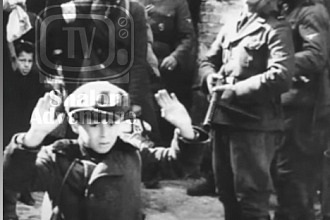
September 1939 brought the invasion of Poland, plunging Europe into war. The Polish army fell within weeks. Britain and France declared war on Germany, while the Soviet Union occupied eastern Poland under a secret pact. Hundreds of thousands of Poles were killed or displaced. Jewish populations were herded into ghettos, overcrowded, filthy, and surrounded by walls of indifference and cruelty. German families moved into seized homes, reshaping the continent with force.
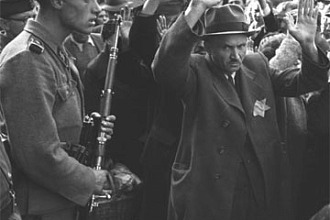
Over the next two years, German troops stormed Denmark, Norway, the Low Countries, Belgium, Luxembourg, and France. Italy, Germany’s Axis partner, declared war on Britain and France. The Balkans were invaded, and Eastern Europe reshaped by alliances and occupation. In June 1941, Germany attacked the Soviet Union. The advance was brutal, but it was also ideological. Behind the battle lines, mobile killing squads called Einsatzgruppen followed the army, shooting men, women, and children. Over 1.5 million Jews were massacred in mass shootings across the east, their lives extinguished in fields, forests, and ravines.
By 1942, the Nazis industrialized their murder. Killing centers were built in Poland, where Jews from across occupied Europe were transported by rail in suffocating cars. Carbon monoxide, Zyklon B, and hydrogen cyanide became tools of systematic death. Meanwhile, the war’s tide slowly turned. Soviet forces pushed west, liberating towns and fields. Allied armies landed in Sicily, Italy, and northern France, advancing steadily toward Germany.
As the Allies approached, the Nazis forced prisoners on death marches into the interior where starvation, exposure, and exhaustion claimed thousands. Camps overflowed with the sick and dying. Half of the prisoners alive in January 1945 would not survive until liberation.
Finally, in May 1945, Germany surrendered. Nearly two-thirds of Europe’s Jews had been murdered. Centuries-old Jewish communities vanished forever. The Holocaust left scars on the earth and memory, a testament to the destructive power of hatred and the unbreakable need to remember.